AI Accessibility Revolution - London Buses
TfL Partnership & Wheelchair Space Detection
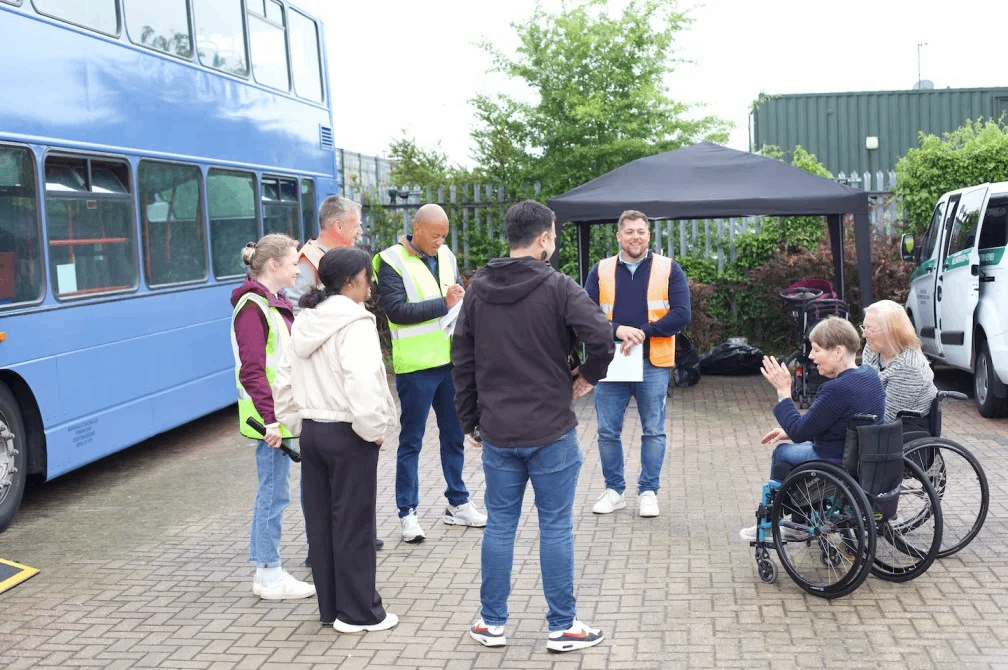
"For many passengers with disabilities, accessing public transport remains a significant challenge. This project aimed to revolutionize accessibility on London buses using AI-driven computer vision technology and cross-sector collaboration."
The Challenge: Voices from the Community
"Bus drivers pass me by because it is too busy."
"I missed my appointment because I was unable to board the bus."
"I was asked to travel at a different time as I was trying to get to work."
1. Project Overview
Transport for London (TfL) has long been a pioneer in urban mobility, but ensuring equitable access for wheelchair users remains a priority. In collaboration with PODTECH and Digital Catapult, this initiative focuses on deploying real-time intelligence to the bus network.
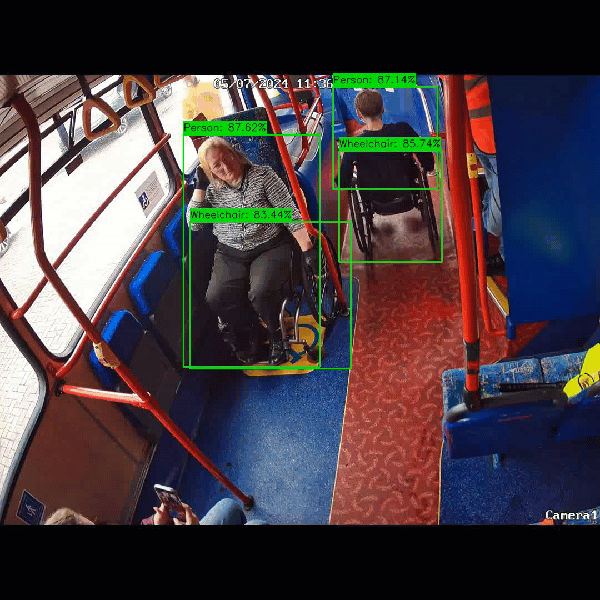
By leveraging advanced computer vision, we are addressing the critical "last meter" problem: knowing whether a wheelchair space is available before the bus arrives.

2. AI-Powered Accessibility Solutions
Real-Time Detection
Our proprietary AI models analyze onboard CCTV feeds in real-time to detect wheelchair space occupancy. The system differentiates between pushchairs, luggage, and passengers, providing accurate availability data without compromising privacy.
3. Overcoming Challenges
Integrating with legacy onboard systems was a significant hurdle. Our engineering team developed a lightweight edge-computing solution that interfaces seamlessly with existing DVR units, requiring minimal hardware retrofitting. This approach ensures scalability across the entire fleet of over 8,000 buses.
4. Future-Ready Integration
This project goes beyond mere detection. The data generated feeds directly into TfL's open data API, allowing journey planning apps (like Citymapper and Google Maps) to display live wheelchair capacity.
"This technology empowers users to make informed travel decisions, reducing anxiety and improving the overall public transport experience for everyone."